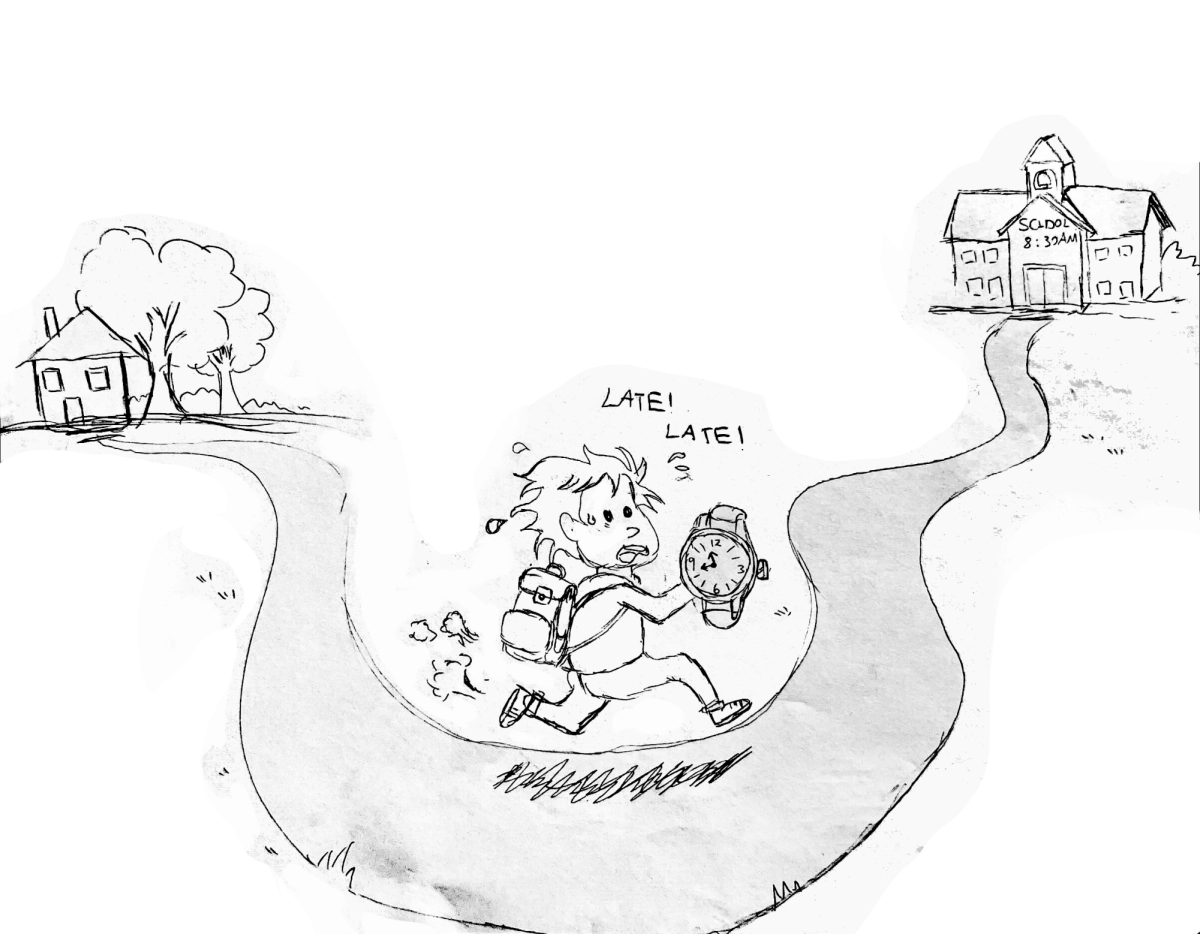
When it comes to school discipline, few topics spark more debate than detention for tardiness. Some argue that strict consequences are necessary for reinforcing responsibility, while others may argue that tardiness is not always within a student’s control. While punctuality is undoubtedly important for an academic setting, students, in my opinion, should not receive such a harsh punishment for being late to school once or twice.
Supporters of detention assert that clear consequences create structure. School, like all institutions, needs to be organized and maintain a certain schedule. If students often arrive late, teachers must repeat instructions or take time out of their own agenda to do so. Junior Cy Cooper shares his experience: “Whenever someone gets to class late, normally we have to go back in the lesson for them.” As Dean of Students Mrs. Simonds asserts: “If you take time from the school, you should give time back too.” Furthermore, detentions can reinforce the idea that punctuality is crucial in a structured environment. When rules are enforced consistently, expectations are clarified, and habits are built that extend beyond grade school.
However, the reality of tardiness is often much more complicated. Many students rely on driving to PDS, and for some, buses may not always be on time. Especially with the traffic in the morning, the front circle can become clogged, delaying students who are actually approaching on time. Junior Brendan Chen explains the issue further: “It’s extremely congested and the line moves very slow.” There are also many other external factors that affect students, such as traffic accidents, car trouble, or family responsibilities. Detention can also add stress by taking time out of already demanding schedules. For those who have heavy workloads, an unexpected detention could hinder their studies.
Ultimately, punctuality should be encouraged, but a detention might not always be the right response to a late arrival. Since PDS only imposes detention after seven lates, we already aim to teach responsibility while respecting the realities and workload that students face. Personally, I applaud our focus on leniency and understanding over automation. Detention could still be an appropriate response to a few situations, but not for all. Being late should lead to conversation and correction, not an immediate detention.