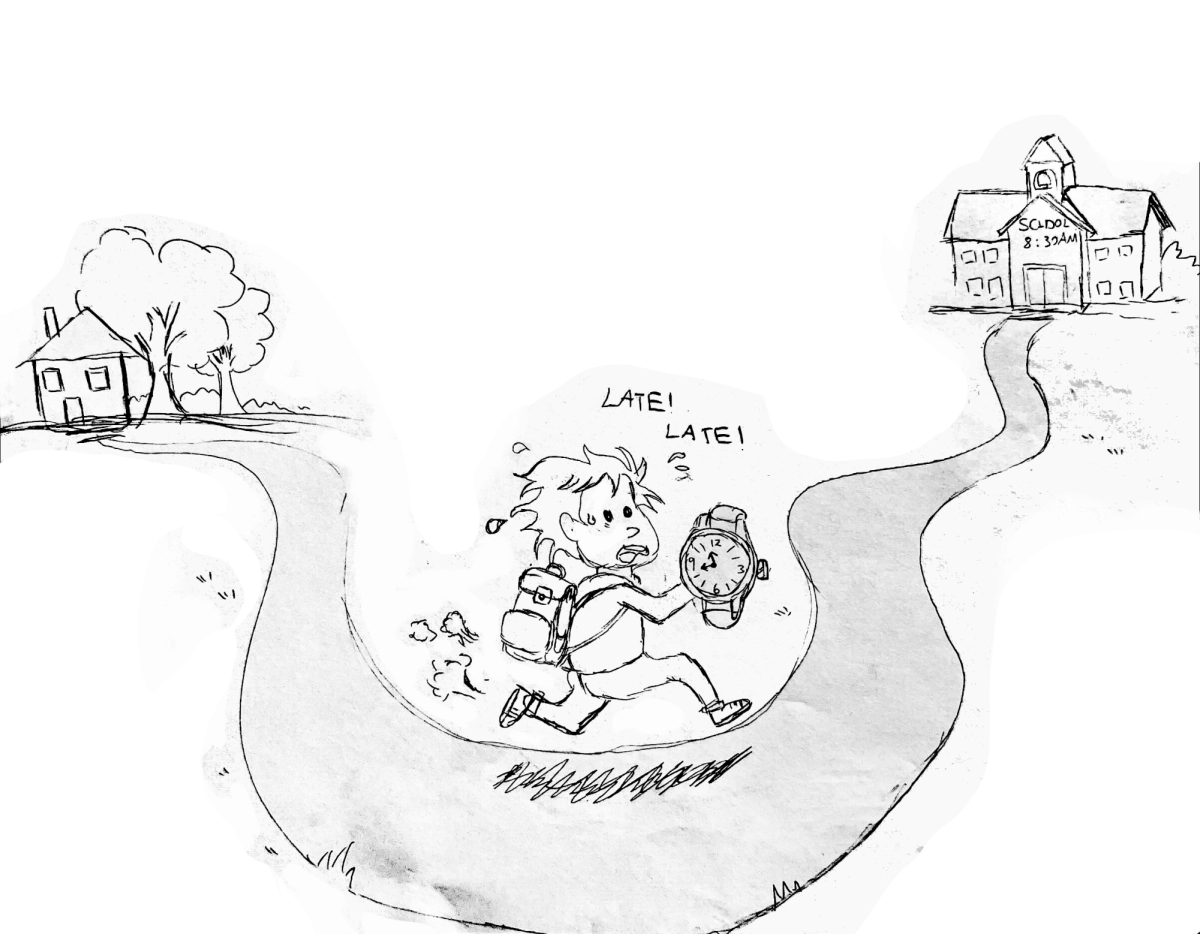
We have all been there—8 a.m., sitting in class half asleep, wondering why school has to start so early. This common problem raises an essential question about whether early school start times are taking away students’ sleep.
According to Director of Health Services Elizabeth Luciano, our body’s circadian rhythm naturally shifts during adolescence. Consequently, the sleep hormone melatonin is released later in the evening, making many students feel sleepy later into the night. This causes them to become “night owls.” Additionally, teenagers typically require around 8 to 10 hours of sleep per night; however, because of school’s early start time, many students do not get enough sleep during school nights.
When teens do not meet the recommended 8-10 hours of sleep, they can experience several negative side effects. Lack of sleep hinders academic performance, causes fatigue, and increases stress. Over time, constant sleep deprivation can lead to lower grades and contribute to mental health problems.
Although altering school start times addresses sleep deprivation, it may conflict with schedules. Many students rely on early start times to coordinate parent drop-offs, and changing them could create conflicts in their schedules. However, a slightly later start time such as 8:30 a.m. is only a small adjustment, and is proven to align better with teenagers’ circadian rhythms, while still being manageable within schedules.
Overall, school should start later for students, specifically at 8:30 a.m. Due to changes in circadian rhythms for teens, a later start time like 8:30 a.m. would allow for more sleep, being beneficial for all students’ well-being and grades. So, although a later school start time can interfere with schedules, it is necessary for schools to adjust their start times to support students’ growth and success.