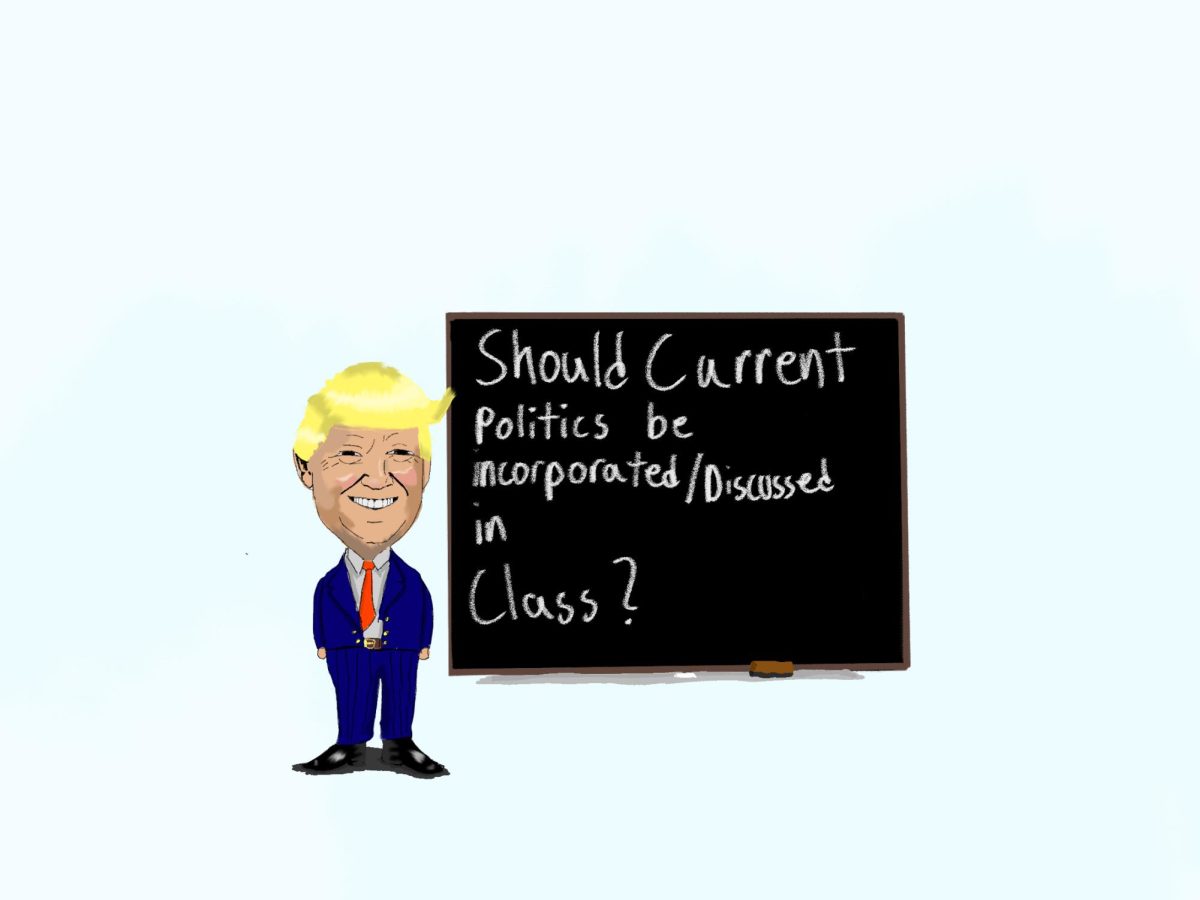
Political debates are often highly opinionated, leading to heated emotional exchanges that divide communities. Since such topics are so sensitive, many schools try to avoid bringing them up completely. However, shielding students from politics is worse than allowing free discussion because politics affect students’ lives, directly and indirectly. So, if political discussion leads to division and the lack of it does not prepare students, then what can schools do?
They should structure the discussion of politics carefully. Schools should take measures to present political information from a neutral standpoint, with an effort to include multiple points of view in order to prevent biased viewpoints and misinformation. Additionally, students should apply active listening, understanding, and preparation to such conversations. Active listening requires participants to listen and attempt to understand opposing viewpoints rather than waiting to respond. Understanding calls for controlled disagreement on ideas. Finally, preparation ensures brought up is from reliable sources and not fabricated.
Ultimately, political conversations do not create division when approached thoughtfully and respectfully. When such discussions are handled properly, they provide students with important everyday knowledge and intellectual maturity.