In the past few weeks, a select group of Princeton Day School juniors has been exploring Cy Twombly’s unique artistic style in the new English course Creative Humanities Experience, or CHEx, taught by English Department Chair Karen Latham. Narrowed down to 20 students by application, CHEx is a course for juniors who are passionate about the humanities. Dr. Latham explained that the course was designed to give students who are “interested in the humanities a chance to do a deep dive and to really explore their creative process and figure out how they want to communicate and bring their art into the world, whether it’s writing, painting, filmmaking, music, dance, [or] architecture.” The latest unit in the course was the Cy Twombly art projects, in which students practiced communicating their creativity by making their own paintings mimicking the style of late American painter and sculptor Cy Twombly.
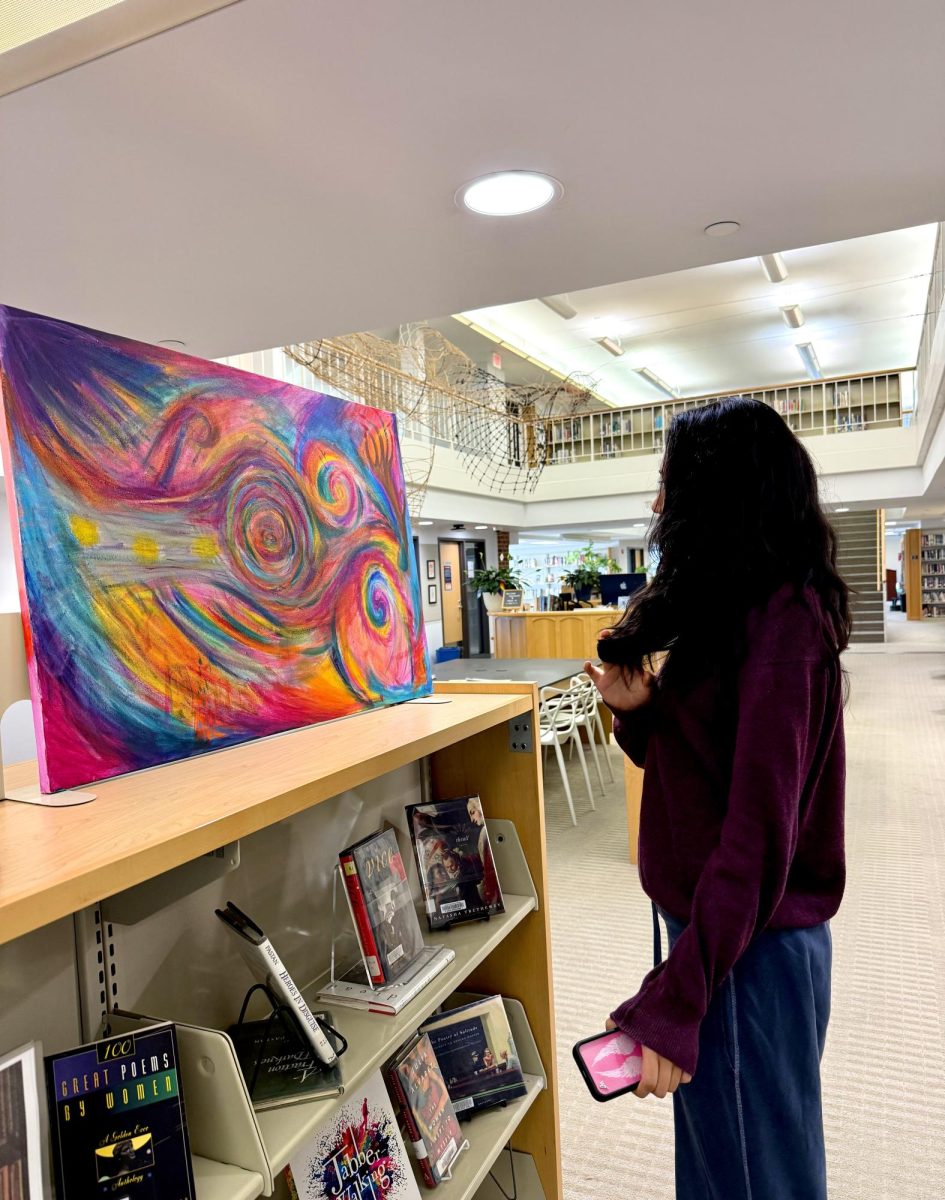
Cy Twombly (1928-2011) was known for his abstract style inspired by myth and literature. As Dr. Latham described it, he was not interested in representing the words he read but rather the emotion he felt while he was reading. For example, he might represent a violent passage with a splatter of crimson paint instead of depicting the scene itself—choosing emotion over literal representation. In CHEx, students were first tasked with analyzing Cy Twombly’s past works, and then moved on to creating their own paintings on 24×36 canvases in the artist’s style. Students have to “identify either a story or an experience in their own life as inspiration, and that’s what they’re transforming onto their canvases,” stated Dr. Latham. Examples of the students’ project focuses Students found inspiration in songs that moved them, favorite passages from literature, films, childhood memories, and more.
Junior Izzy Li was inspired by the opera Madama Butterfly, and expressed that learning “about [art] in an English class and actually getting to create a piece of artwork was an exciting experience.” Through the Cy Twombly project, Li stated that she learned “to just go along with it and take risks because that is when [she] was able to come up with something [she] was pleased with.” Dr. Latham’s CHEx Cy Twombly art projects not only allowed students to combine art and humanities through their study of the painter in question, but to explore their own passions and creative process.