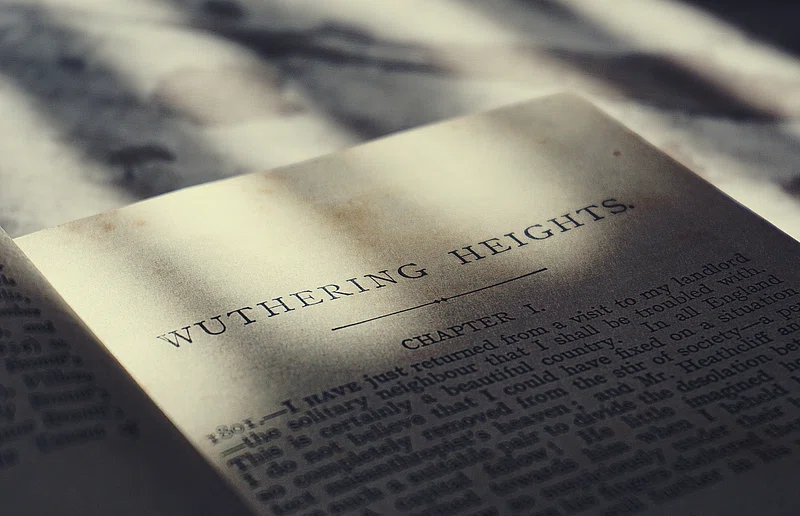
There are a thousand Hamlets in a thousand people’s eyes. Likewise, every era has its own Wuthering Heights, shaped by the tastes and concerns of its time. In this spirit, Emerald Fennell’s adaptation of Emily Brontë’s 1847 novel Wuthering Heights has sparked intense debate over how far creative liberties can go before a classic’s essence is compromised.
Among those more skeptical is Upper School English teacher Ms. Jessica Manners, who is currently teaching Brontë’s novel in her Love and Hate course. Importantly, her criticism is not directed at bold reinterpretations themselves. “I have no problem with ambitiously inaccurate adaptations,” she explained, noting that even unconventional reimaginings can yield great results. She also recognizes the difficulty in adapting a dense nineteenth century classic into a truly faithful film. However, from the start, she had a sense that Fennell had little interest in conveying the full weight of Brontë’s novel. Apart from only covering the first half of the novel and making questionable casting choices, the adaptation omits many of Brontë’s “film-ready” monologues, softens the characters, and blots out much of the novel’s nuanced social dynamics and racial commentary. The film’s visuals, while striking, left Ms. Manners wondering, “So what?” Without a clear connection to the story’s deeper themes, the “visual feast” failed to meaningfully extend the spirit of the original work and instead came across as “art for art’s sake.” As Ms. Manners remarked, “If you’re going to make bold changes to a beloved classic, while still claiming that it’s a faithful adaptation, there needs to be a very clear reason for it.” In fact, she added that Fennell “is trying to shock people [but has] actually made a movie that is much less shocking than the book.” Ultimately, rather than feeling outraged, Ms. Manners found herself “just sort of bored,” concluding that the adaptation’s attempts to shock fell flat.
While some were critical of the film, others, including Senior Amber Pancholi, offered a more positive take. Pancholi was initially skeptical, given the negative press surrounding the adaptation—particularly regarding the costume choices and the inclusion of Charli XCX’s electropop style. She shared, “I was confused on how Fennell would blend these modern elements into such a timeless classic.” Despite her doubts, Pancholi stepped out of the theater pleasantly surprised. The adaptation, she felt, was “beautifully done and definitely exceeded expectations.” While she mentioned that the characters were somewhat simplified compared to the novel, she viewed this as common in many adaptations, adding, “Fennell’s movie is not worse than other adaptations.” Regarding Fennell’s emphasis on romance, Pancholi interpreted this choice as intentional commentary: “I think her [Fennell’s] goal was to call out how this book has been transformed into an idealized romantic narrative. By giving the audience what they expected in terms of romance, Fennell highlighted how people often misinterpret the story as a pure, tragic romance when, in fact, it’s much darker.” In this way, Fennell’s bold approaches seem less misguided and more purposeful. For Pancholi, that distinction made all the difference, letting it turn into a reinterpretation that she thoroughly enjoyed.
A classic earns its status not only by inspiring new creations, but by challenging every adaptation to withstand the scrutiny that inevitably follows. It dares creators to innovate, to take risks, yet every change, choice, and conception faces the pressure of criticism from both audiences and critics alike. Fennell’s ‘Wuthering Heights’ is just the latest example. For some, her changes remove much of the classic’s complexity. For others, they act as a mirror, reflecting the expectations and values of today’s audiences. Even so, every work of art lives in the space between its creator and audience. This is not the first adaptation to spark debate, and it certainly will not be the last—that is to say, controversy only affirms a classic’s enduring impact.