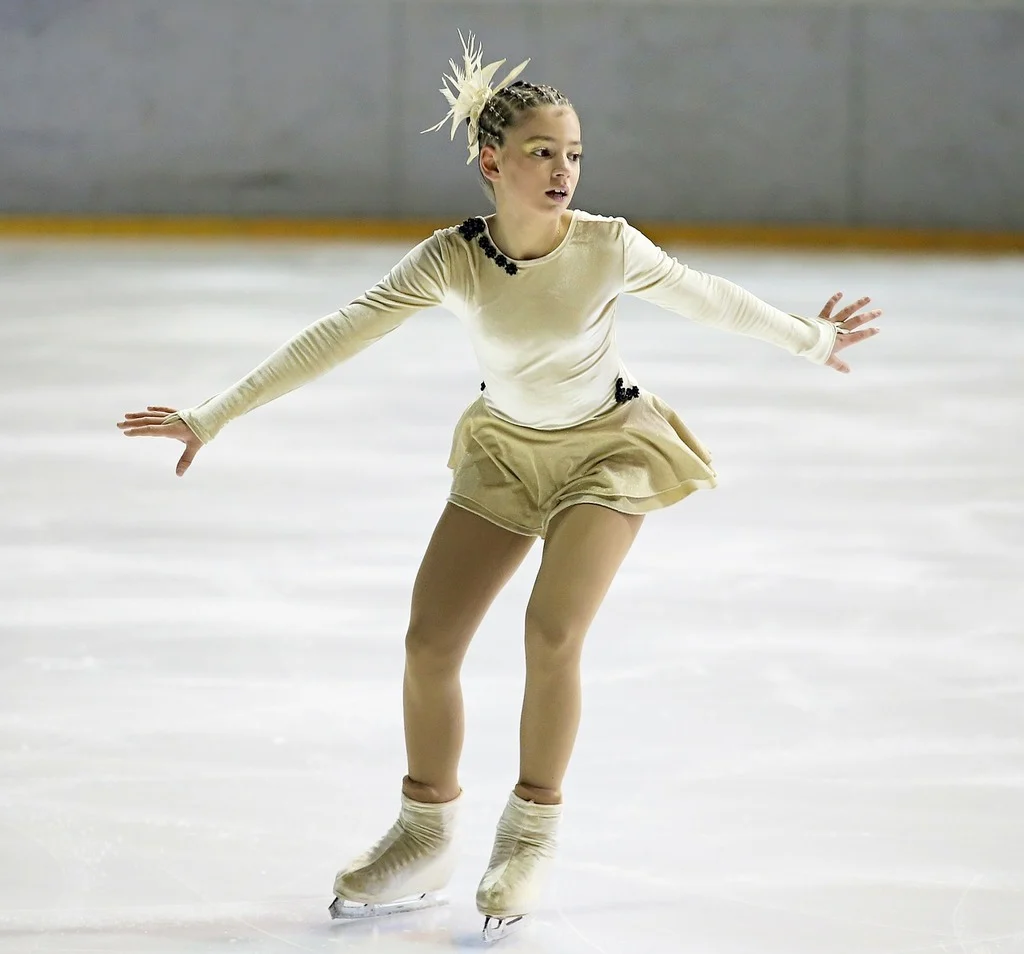
In the 2026 Olympics, figure skating was the most-viewed event. In comparison to the 2022 Beijing Games, viewership of the sport has risen by 93%. Given the peak in new viewership, various opinions regarding scoring, potential biases, and more have been spiraling through social media, whether they are from trained figure skaters, beginner skaters, or people who have never stepped foot in an ice rink.
Olympic figure skating is split into 5 separate events: men’s singles, women’s singles, pairs, ice dance, and the team event. A huge part of the sport that is often glossed over is how scoring works. Many believe it is based purely on skill and tricks, yet disregard the artistry aspect, a part of scoring that can even be deemed more important than general skills.
After asking Junior Julian Wolberg about what struck him as a new viewer of Olympic figure skating, he professed, “What surprised me most was the rules and how complex the scoring is– I thought it was super interesting.” Skaters get two separate scores between technical elements; which are based on difficulty and execution of jumps, spins, and steps; and then a program component score that evaluates artistry, skating skills, and presentation. By combining these components, skaters synthesize beautiful, creative programs.
Juvenile Eastern Sectional Gold Medalist Freshman Rachael Tan, who is also a skater for the 2025 and 2026 national development teams, reflected on her program’s similarity to those in the Olympics. “Actually, just recently I was watching the men’s section of the figure skating Olympics and I was thinking to myself how some of the moves were actually similar if not identical to the steps in my program. I think that kind of shows a familiarity in skating and how in the end it’s just one big community of coaches, athletes, and choreographers.” Her words demonstrate a common baseline in all figure skating programs–these two aspects of artistry and technique.
In the end, figure skating’s growing audience reflects a deeper understanding that the sport’s true beauty lies not in technique alone, but in the powerful fusion of skill, expression, and storytelling on ice.